
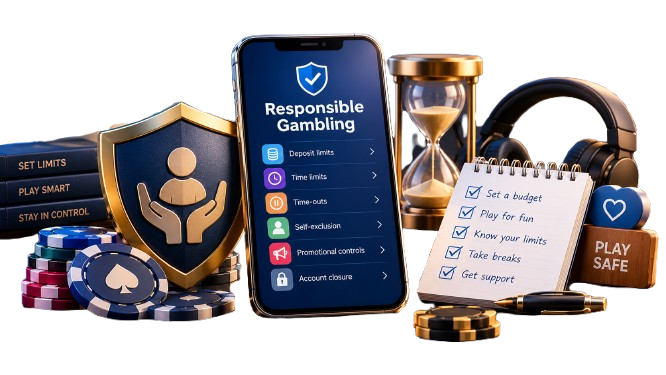
Gambling works best as something you pay for, like a match ticket or a night out, and not as a way to make money or win back what you’ve lost. Responsible gambling in Nigeria comes down to a few simple habits: deciding your limits before you play, knowing the risks, and recognising early when it stops being fun.
It starts with age. Gambling is for adults aged 18 and over, and some casinos or states may set extra conditions. Before you sign up anywhere, check who the casino accepts, how its payments work and what the rules are on online entertainment in your state.
Set your budget before the first deposit, not after a losing run. Pick a fixed time for playing and stick to it. Keep money for food, rent, school fees and bills completely separate. Most licensed casinos offer tools that help: deposit limits, reminders about how long you’ve been playing, cooling-off periods and self-exclusion. If you’d like to block gambling payments at the bank level too, ask your bank whether it offers that option for your card or account.
Watch for the signs that gambling is starting to cost more than money. Chasing losses, hiding bets from family, borrowing to play or finding it hard to stop all point to the same thing: it’s time to step back and get support. This guide covers how to set limits, use account and payment restrictions, take a break or self-exclude, and where to find free help in Nigeria.

Gambling Rules and Age Limit in Nigeria
The casino age limit in Nigeria is 18, but age is only the first check. Who can play, which licence a casino needs and how payouts are taxed all depend on the state you live in. A few minutes with the rules before signing up saves trouble later.
| Rule | What it means for you |
| Minimum age | You must be 18 or older to gamble. Don’t register, deposit or play if you’re under 18. |
| State regulation | Each state regulates gaming within its borders, and the FCT has its own lottery regulatory office for Abuja. A licence from one state doesn’t automatically cover another. |
| Operator licence | Check the casino’s licence with the regulator for your state. In Lagos, the LSLGA publishes a list of licensed operators and a guide to checking any company before you play. |
| Identity and age checks | Casinos can ask for ID to confirm your age and identity, and in Lagos KYC includes your NIN. Use your own real details, and never sign up with someone else’s documents or account. |
| Online casino rules | Every casino sets its own terms for eligibility, deposits, withdrawals, bonuses and account closure. Read them in full, not just the promo page. |
| Casino gaming rules | Each game has its own rules and payout structure. Open the paytable or game info before you stake anything. |
How to Check the Rules for Your State
Start with the regulator for your state or the FCT, then look the casino up in its official list of licensed operators. Remember that the age limit for casino play is only one requirement. Licensing, eligibility, verification and payment terms matter just as much. If you can’t confirm where a casino stands, hold off on depositing until you can.
How to Set Limits Before You Play
The best time to decide how much to spend is before you log in, not in the middle of a losing streak. Set two limits up front: money and time. Then pick the account and payment tools that will help you keep them. And once a limit is set, leave it alone. Raising it to win back losses defeats the point.
Deposit and Loss Limits
A deposit limit caps how much you can add to your casino account per day, week or month. A loss limit caps how much you’re willing to lose in a set period. Not every casino offers both, so check the account settings for which ones are available.
A simple way to set them up:
- Work out a budget: only money left after rent, food, school fees, bills and debt repayments;
- Pick a deposit limit that fits that budget, not one based on what you hope to win;
- Add a loss limit if the casino has one, and stop once you hit it;
- Don’t raise a limit after a loss, since that’s exactly how spending runs past the plan;
- Check how changes work, because many casinos lower a limit instantly but delay an increase.
The budget is for all your gambling, not one site. If you play at two casinos and bet on football on the side, add it all together.
Session Time Limits
Without a fixed finish time, one more round easily turns into another hour, especially right after a big win or a bad loss. Decide how long you’ll play before you open the casino, and stop when the time is up.
A few habits that help:
- Set a start and end time, with a phone alarm or the casino’s session reminder;
- Take real breaks: step away from the screen instead of betting between rounds;
- Skip playing when you’re tired, stressed or distracted;
- Keep the original end time, even if you’re behind;
- Look back afterwards at how long you played and whether you stuck to the plan.
Some casinos offer reality checks, session timers or time-outs, and the settings vary from one site to another. If you keep blowing past your planned finish time, a longer break or self-exclusion is the next step.
Payment Controls for Nigerian Players
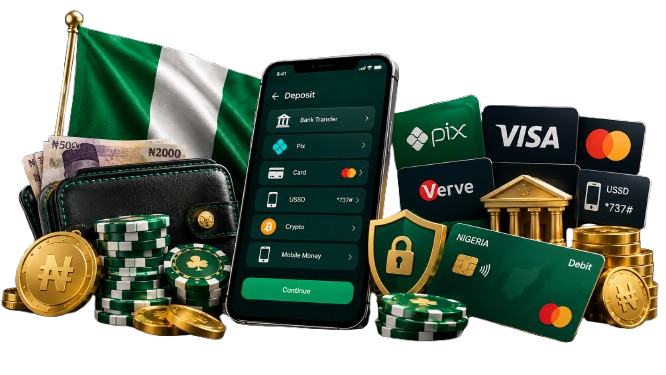
Casino payment methods Nigeria players use, from bank transfer and USSD to cards, OPay and PalmPay, all come with their own limits, fees and payout routes. Some also make spending easier to keep track of.
| Control | How it helps | What to check |
| Casino deposit limits | Caps what goes into your casino account. | Daily, weekly or monthly, and how fast changes take effect. |
| Bank and card controls | Many banking apps let you freeze a card or set spending limits. | Whether your bank can restrict gambling payments specifically, not just all card use. |
| Transaction alerts | SMS or app alerts show every payment as it happens. | That alerts are on for cards, transfers and USSD. |
| Wallet settings | OPay, PalmPay and similar apps have their own limits. | Available limits and fees. |
| Payment history | Shows exactly how much has gone to gambling. | Review it across every account and wallet you use. |
When you compare online casino payment methods Nigeria casinos accept, speed shouldn’t be the only factor. A method that keeps a clear record and works with your limits is worth more than one that’s a few minutes faster. And no casino online payment should ever come from borrowed money or cash set aside for essentials.
If you want to stop gambling payments altogether, ask your bank and your wallet provider which controls they offer. Blocking one card won’t stop transfers, USSD or another account, so cover every route you use.
Deposit limits, time limits and payment controls work best together. If you still can’t keep to your limits, stop playing and reach out for support.

Recognizing Gambling Problems and Managing Your Budget
Keeping an eye on both how you play and how much you spend is the easiest way to catch a problem early. Gambling should stay inside a fixed budget and never eat into bills, work, family or sleep. If it starts getting hard to control, lowering your deposits usually isn’t enough on its own. A proper break and someone to talk to help more.
Warning Signs of Gambling Problems
The problems associated with gambling don’t always start with a big loss. More often it’s small things: going past your own limits again and again, or playing far longer than you meant to. When those become a habit, take them seriously.
| Warning sign | What it looks like | What to do |
| Chasing losses | Betting more to win back what’s gone. | End the session and don’t top up. |
| Going over budget | Using money meant for rent, food or bills. | Stop depositing and sort out the essentials first. |
| Hiding it | Dodging questions about bets, losses or time spent playing. | Talk to someone you trust or a confidential helpline. |
| Borrowing to play | Loans, credit or money from friends to keep going. | Stop gambling and get help with the debt. |
| Can’t stop | Carrying on after a limit or after deciding to quit. | Use a time-out or self-exclusion. |
| Other things slip | Work, sleep or relationships start to suffer. | Take a break and speak to a professional. |
One sign on its own can happen to anyone. Several at once, especially repeated loss of control, can point to gambling addiction problems and are a clear reason to reach out. A table can’t diagnose anything, but it can tell you when to stop and ask for help. Chasing losses is what usually makes the problems of gambling addiction harder to get out of, so that’s the first habit to break.
How to Set and Maintain a Casino Budget
A casino budget is what’s left for gambling after everything important is paid. It should only ever be money you can afford to lose, never rent, light bills, food, school fees, debt repayments, emergency savings or borrowed cash.
To set one up and keep it:
- Work out what’s actually spare: income minus essentials, debt payments and savings;
- Fix a weekly or monthly gambling amount and don’t go over it;
- Track every deposit across all casino and betting accounts;
- Keep gambling money apart from everyday money;
- Stop when the budget is gone, without topping up after a loss or because a win “feels close”;
- Check your spending regularly, and if it’s touching bills or savings, stop and rethink.
A budget casino isn’t simply the one with the lowest minimum deposit or the biggest bonus. What matters is whether your play fits your entertainment money without putting pressure on anything else. Even ₦100 deposits add up fast when the limit keeps getting ignored.
If a budget is no longer keeping your gambling in check, switch on account restrictions or self-exclusion and contact a support service. The earlier you do it, the easier it is.
Support for Family and Friends
Watching someone close to you lose control of their gambling is hard, and it’s easy to feel you should fix it. You can’t control another person’s betting. What you can do is tell them honestly how it affects you, stop paying for it and help them find support when they’re ready.
| Situation | What helps | What to avoid |
| They hide their gambling | Pick a calm, private moment and mention specific things you’ve noticed, like missed bills or money that’s unaccounted for. | Accusations, threats or starting an argument while they’re playing. |
| They borrow to gamble | Say clearly what you can and can’t help with. | Lending money to cover losses or taking out loans for them. |
| They can’t stop | Suggest deposit limits, a time-out or self-exclusion. | Believing a promise to quit will be enough on its own. |
| The household budget suffers | Go through essential costs together and ring-fence money for bills and children. | Giving open access to shared accounts or letting unpaid bills slide. |
| They’re ready for help | Offer to find a counsellor, doctor or support service with them. | Pushing them to share more than they’re ready to. |
| It’s affecting you | Get support for yourself and set limits on time, money and contact. | Making their recovery your job alone. |
Practical Steps for Family Members
Small, specific steps work better than trying to solve everything in one conversation:
- Protect your money: keep your bank details, cards and PINs private, and think carefully before paying off anyone’s gambling debts;
- Talk about real effects: point to concrete things, like rent money that went missing or the same arguments about spending;
- Make help easier to reach: offer to look up counselling options or go with them to an appointment, if they want that;
- Look after the children: keep money for food, rent and school fees completely separate;
- Take care of yourself: talk to a doctor or counsellor if the situation is affecting your health, sleep or work.
Self-exclusion and payment controls can make it harder to gamble, but they don’t replace proper support. Don’t log into someone else’s account or use their details to set restrictions without their agreement. Those tools work best when the person turns them on themselves.
If gambling ever leads to threats, violence or someone being in immediate danger, your safety comes first. Call 112, Nigeria’s emergency number. And remember that support isn’t only for the person who gambles. Family and friends deserve help too.

Children and Account Safety
A casino account should be as off-limits to children as a bank card. Gambling is for adults aged 18 and over, and on a shared phone or laptop it takes very little for a child to open a game or tap a saved payment. A few simple habits close those gaps.
| Safety step | What to do | Why it matters |
| Keep logins private | Use a strong password you don’t use anywhere else, and never share it. | Nobody else can get into your account. |
| Log out every time | Sign out on shared phones and computers, especially ones your children use. | No open session is left for someone to pick up. |
| Lock saved payments | Remove stored cards from shared devices and put a PIN or fingerprint lock on banking apps. | No deposit can happen by accident. |
| Set device controls | Turn on parental controls, age filters and website blocks on children’s devices. | Gambling sites and ads stay out of reach. |
| Watch the alerts | Check login notifications, SMS alerts and transaction history. | Anything you didn’t do shows up quickly. |
| Update your devices | Install system updates and use the built-in security features. | Known security holes get patched. |
How to Assess Casino Safety
“Is online casino safe?” is one of the most common questions players ask, and no single feature answers it. A safe online casino shows its hand in the details:
- The company behind the site is named, with a licence number you can check with the regulator;
- Deposits, withdrawals, verification and account closure are explained in plain terms;
- The site uses an encrypted connection and publishes a clear privacy policy;
- Deposit limits, time-outs and self-exclusion are available in your account;
- Official support is easy to reach, with a clear way to report account problems.
Whether you’re asking “is casino safe” about one brand or comparing several, these checks don’t change, and polished design or big promises can’t replace them. A safe and secure casino also makes it hard for anyone else to get into your account. At GOKA, for example, the account is tied to the phone number verified at sign-up, and passwords can only be changed through that number or 24/7 live support.
Mobile and Shared-Device Safety
A safe mobile casino is one you got from the right place. Open the casino through its official website, never install APK files from unknown sources, and ignore payment links sent by SMS, WhatsApp or Telegram from people you don’t know.
Calling a site the best safe online casino means nothing until the licence, security, payment rules and player tools have been checked. At home, keep gambling apps off your children’s device profiles and don’t stay logged in on shared phones or tablets.
If you spot a login or payment you didn’t make, change your password straight away, contact the casino through its official support and tell your bank or wallet provider if your card or account details may have been exposed.
Self-Exclusion Tools and Where to Get Help in Nigeria
When deposit limits and short breaks stop working, self-exclusion is the next step. It locks you out of a gambling account, or a whole group of sites, for a period you choose, and you can’t undo it on a bad day. It works best alongside other tools and, when gambling is affecting daily life, real support from a professional.
| Tool | How it works | What to check |
| Self-exclusion | Blocks access to your account or to several operators for a set period. | Length, start date, whether it can be cancelled early, and how many sites it covers. |
| Time-out | A shorter break, from a day to a few weeks. | Available lengths and whether you can reopen the account before it ends. |
| Deposit and loss limits | Caps what goes in or what can be lost per day, week or month. | Which limits exist and when changes take effect. |
| Bank and payment controls | Ask your bank or wallet whether it can restrict gambling payments. | Which cards, transfers and USSD routes the control covers. |
| Professional support | A counsellor or doctor can assess the harm and talk through treatment. | Availability, confidentiality and any cost. |
| Someone you trust | Helps with appointments, money boundaries and day-to-day steps. | Agree on what help you want, and never hand over passwords. |
How to Activate Self-Exclusion
Look for self-exclusion in your account settings or responsible gambling page. If you can’t find it, message the casino’s online casino support team and ask how to restrict your account. Read the terms before you confirm, especially the length and whether it can be lifted early.
Once it’s active, don’t open a new account somewhere else. Exclusion at one casino usually covers only that casino. Players in Lagos can go further with SafePlay, the state’s free self-exclusion registry: one registration with your NIN blocks every LSLGA-licensed operator for 3 months up to permanently. It doesn’t cover offshore or unlicensed sites, so combine it with each casino’s own tools, payment controls and site blockers on your phone.
Where to Get Gambling Support in Nigeria
If gambling is hurting your finances, relationships or daily life, these services can help:
| Service | Contact | Support |
| Gamble Alert | gamblealert.org.ng · 24/7: +234 916 295 7989 · Toll-free: +234 705 889 0073, +234 705 889 0074 | Gambling-specific counselling, treatment and information for players and families. |
| SafePlay | safeplay.ng · 24/7 live chat on the site | Lagos State’s official self-exclusion registry, run with the LSLGA, with access to counsellors. |
| Mentally Aware Nigeria Initiative (MANI) | mentallyaware.org · WhatsApp: +234 916 841 7413 | Free mental health support, mainly for young people, including stress and distress linked to gambling. |
Contact details can change, so check each organisation’s website for the latest numbers. If gambling has taken a toll on your mental health, a doctor or qualified counsellor can help you work out the right next step. In an emergency, call 112.
What to Do About Casino Account Problems
If you run into online casino withdrawal problems, start with the basics: the withdrawal terms, any pending verification, the transaction status and the stated payout time. Then contact the casino through its official support and keep screenshots of your messages and transactions.
Casino support can explain account blocks and payment steps, but it isn’t a substitute for help with gambling harm. If a complaint isn’t resolved, use the casino’s formal complaints process and check whether the regulator for your state accepts complaints. Never share your password or pay a “release fee” to anyone who promises to unlock your winnings. That’s a scam.
Self-exclusion and limits work best together with real support. Reaching out early makes the money, family and personal side of things much easier to fix.

Conclusion
Gambling stays fun when you decide the rules before you play: a budget you can afford to lose, a time to stop, and an account no one else can get into. Most problems start when those rules slip, and catching that early makes all the difference.
If it’s getting hard to stop, don’t wait for it to get worse. Use self-exclusion, including SafePlay if you’re in Lagos, ask your bank which payment controls it offers, and talk to Gamble Alert or someone you trust. Help is free, and reaching out is the first step.
Before playing anywhere, confirm you’re 18 or over, check the casino’s licence and read the current terms. And keep it what it should be: entertainment, not a way to make money or win back losses.